 Posted by
 The modern workplace has undergone a dramatic transformation, with Microsoft Teams emerging as a central hub for collaboration and communication. Organisations are increasingly seeking ways to streamline their workflows by integrating essential business functions directly into the platforms where employees already spend their time. This trend has significant implications for IT Service Management (ITSM), as traditional ticketing systems and service portals often exist in isolation from daily work environments.
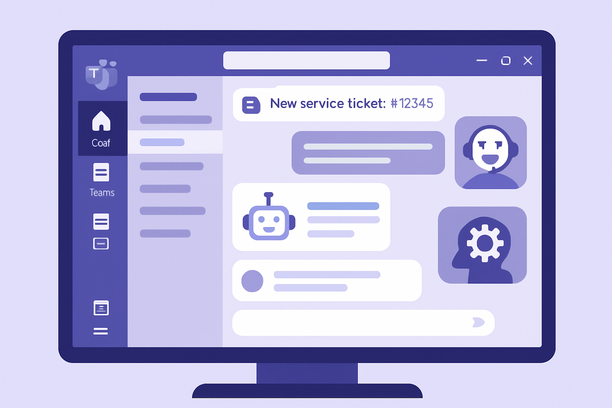
Matrix42 addresses this challenge by bringing service management capabilities directly into Microsoft Teams. Rather than forcing employees to switch between multiple applications or navigate to separate service portals, they can now access IT support, submit requests, and track incidents without leaving their primary collaboration platform. This integration represents a fundamental shift in how organisations deliver IT services, meeting users where they are rather than requiring them to come to the service desk.
The benefits of embedding ITSM within Teams are substantial. Users experience reduced friction when requesting support, as they can initiate service requests through familiar interfaces using natural language and conversational interactions. The integration leverages Teams’ chat functionality to create a more intuitive, consumer-grade experience for enterprise service delivery. This approach not only improves user satisfaction but also increases service adoption rates, as employees are more likely to follow proper channels when those channels are conveniently accessible within their daily workflow.
From an IT perspective, this integration maintains the robust service management capabilities that organisations require while modernising the user-facing experience. Service desk agents can manage tickets, respond to requests, and maintain service levels using their existing ITSM platform, while end users benefit from a streamlined, Teams-native interface. This architectural approach ensures that governance, compliance, and reporting requirements are met without sacrificing user experience.
As organisations continue to embrace digital workplace strategies, integrating service management into collaboration platforms like Microsoft Teams represents the future of ITSM. By reducing context switching, lowering barriers to service access, and delivering support through channels that employees prefer, organisations can achieve higher productivity, improved service delivery outcomes, and greater employee satisfaction. The key to successful digital transformation lies not just in implementing powerful tools, but in making those tools accessible and intuitive within the flow of everyday work.