
 Posted by
 Picture this: It’s Monday morning, your coffee is still hot, and suddenly your enterprise messaging system crashes. Orders stop flowing, customer data gets stuck in queues, and your phone starts ringing off the hook. If your organisation relies on IBM MQ for critical business operations, this nightmare scenario could become a reality without proper monitoring in place.
The Hidden Backbone of Enterprise Communication
IBM MQ serves as the invisible highway for enterprise data, quietly ensuring that messages flow between applications, systems, and services. Yet despite its critical role, many organisations treat MQ monitoring as an afterthought—a decision that often comes back to haunt them.
What exactly makes IBM MQ so crucial?
- Message reliability: Ensures critical business data reaches its destination
- System integration: Connects disparate applications across your enterprise
- Transaction processing: Handles high-volume, mission-critical operations
- Scalability: Supports growing business demands without performance degradation
The Real Cost of Poor MQ Monitoring
When IBM MQ issues go undetected, the ripple effects can be devastating. Consider these common scenarios:
Performance Degradation Creeps In Silently
Queue depths gradually increase, message processing slows down, and by the time users notice, your entire system is operating at a crawl. Without real-time monitoring, these issues often snowball into major outages.
Capacity Planning Becomes Guesswork
How do you know when to scale your MQ infrastructure? Without comprehensive metrics on queue usage, connection counts, and message throughput, you’re essentially flying blind, leading to either over-provisioning (wasted budget) or under-provisioning (system failures).
Compliance and Audit Trails Suffer
Many industries require detailed logging and monitoring of message flows. Poor MQ monitoring can leave you scrambling during audits, potentially facing regulatory penalties.
Modern Monitoring: Beyond Basic Health Checks
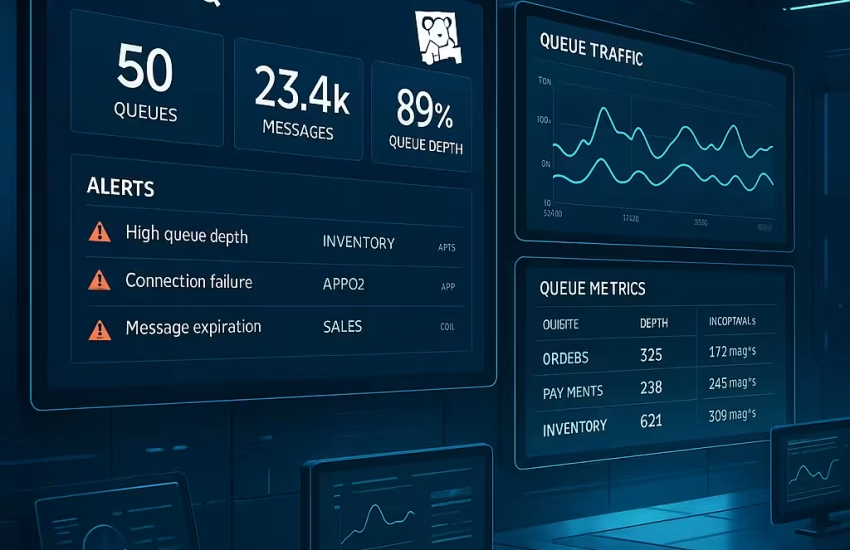
Traditional MQ monitoring often relies on basic queue manager status checks—but that’s like checking if your car’s engine is running without looking at the dashboard. Modern monitoring solutions like Datadog’s IBM MQ integration provide comprehensive visibility into:
- Real-time queue metrics: Depth, age, and processing rates
- Connection monitoring: Active connections and potential bottlenecks
- Performance analytics: Message throughput and processing times
- Error tracking: Failed messages and system exceptions
- Capacity forecasting: Predictive analytics for infrastructure planning
Building a Proactive Monitoring Strategy
Start with the fundamentals:
- Identify critical queues: Which queues handle your most important business processes?
- Set meaningful thresholds: Don’t just monitor, monitor with purpose
- Implement alerting hierarchies: Different issues require different response levels
- Create actionable dashboards: Visibility without actionability is just noise
Think beyond reactive monitoring:
- Use historical data to identify patterns and predict issues
- Implement automated responses for common problems
- Create correlation rules to reduce alert fatigue
- Establish clear escalation procedures for different severity levels
The Technology Integration Advantage
Modern monitoring platforms excel at connecting IBM MQ metrics with broader infrastructure monitoring. This holistic view helps you understand how MQ performance impacts (and is impacted by) other systems in your environment.
For example, correlating MQ queue depths with database performance metrics might reveal that slow database queries are causing message backlogs—insight that would be impossible with siloed monitoring approaches.
Questions for Your Organisation
As you evaluate your current MQ monitoring approach, consider these critical questions:
- Can you detect and respond to queue issues before they impact users?
- Do you have visibility into message flows across your entire enterprise?
- Are you proactively planning for capacity needs or reactively responding to outages?
- How quickly can your team identify the root cause of MQ-related issues?
Taking Action: Your Next Steps
Effective IBM MQ monitoring isn’t just about preventing problems—it’s about enabling business agility. When you have comprehensive visibility into your messaging infrastructure, you can make informed decisions about scaling, optimisation, and innovation.
Ready to transform your MQ monitoring strategy? Start by auditing your current monitoring capabilities, identifying gaps, and exploring modern solutions that provide the depth and breadth of visibility your business demands.
What challenges has your organisation faced with IBM MQ monitoring? Share your experiences in the comments below—your insights could help fellow IT professionals avoid similar pitfalls.
Don’t let poor monitoring be the weak link in your enterprise infrastructure. Take action today, and ensure your IBM MQ environment is truly supporting your business objectives.
Follow our blog for more insights on enterprise infrastructure monitoring and optimisation strategies.
[#IBMMonitoring, #EnterpriseIT, #ITOperations]